丹下健三(1913–2005)は、戦後日本を代表する建築家で、世界にモダニズム建築の魅力を広めた人物です。香川県では県庁舎東館、旧香川県立体育館「船の体育館」を設計し、瀬戸内の風土と調和する建築で「建築王国・香川」の名を高めました。さらに広島平和記念公園や原爆死没者慰霊碑、今治市庁舎・公会堂、倉敷市立美術館(旧倉敷市庁舎)、戦没学徒記念 若人の広場公園(淡路島)など、地域の歴史や景観に寄り添った名作を各地に残しています。1964年東京五輪のために設計した国立代々木競技場は、世界的にも高く評価され、日本建築の象徴的存在となりました。その功績は今も文化的遺産として輝き続けています。
日本国内外で活躍し「世界のタンゲ」と称された、日本を代表する建築家です。第二次世界大戦後から高度経済成長期にかけて、数多くの国家的プロジェクトを手がけ、都市計画にも大きな影響を与えました。磯崎新、黒川紀章、槇文彦、谷口吉生ら世界的建築家を育て、日本人・アジア人として初めてプリツカー賞を受賞しました。
Kenzo Tange (1913–2005) was a leading postwar Japanese architect who spread the appeal of modernist architecture throughout the world. In Kagawa Prefecture, he designed the East Wing of the Prefectural Office Building and the former Kagawa Prefectural Gymnasium, known as the ‘Ship Gymnasium,’ creating buildings that harmonise with the climate of the Seto Inland Sea and enhancing Kagawa's reputation as an ‘architectural kingdom.’ He also left behind masterpieces that blend in with the history and landscape of each region, such as the Hiroshima Peace Memorial Park, the Atomic Bomb Victims' Memorial Monument, the Imabari City Hall and Public Hall, the Kurashiki City Museum of Art (former Kurashiki City Hall), and the War Memorial Park for Young People (Awaji Island). The National Yoyogi Stadium, which he designed for the 1964 Tokyo Olympics, was highly acclaimed worldwide and became a symbol of Japanese architecture. His achievements continue to shine as cultural heritage to this day.
He is a renowned architect who has made significant contributions both domestically and internationally, earning the title ‘Tange of the World.’ From the post-war period to the high-growth era, he oversaw numerous national projects and exerted a significant influence on urban planning. He mentored world-renowned architects such as Arata Isozaki, Kisho Kurokawa, Fumihiko Maki, and Yoshio Taniguchi, and was the first Japanese and Asian architect to receive the Pritzker Prize.

広島平和会館原爆記念陳列館(1952年 / 重要文化財)、広島平和記念公園(1955年 / 国の名勝)、香川県庁舎(1958年 / 重要文化財)、倉敷市立美術館(1958年 / 旧倉敷市庁舎)、今治市役所庁舎・公会堂(1958年)、船の体育館(1964年 / 旧香川県立体育館)、戦没学徒記念館(1966年)など、四国・瀬戸内にも多くの建築が残されています。
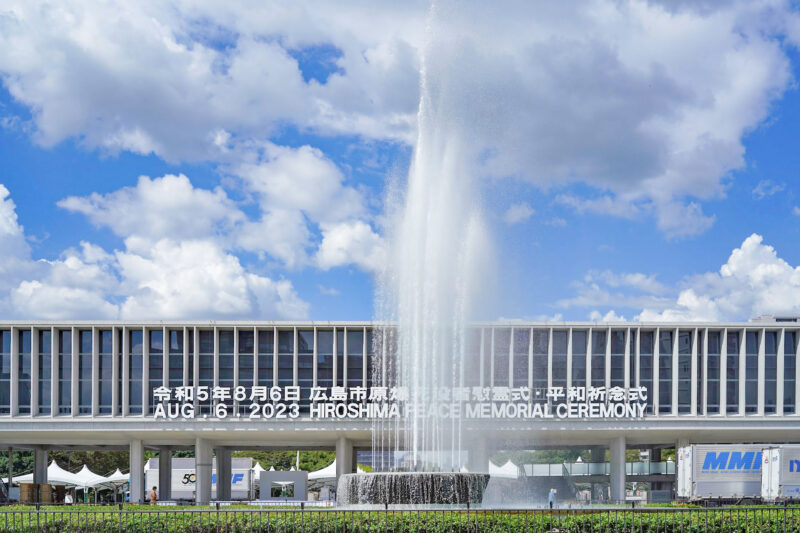 広島平和会館原爆記念陳列館(1952年 / 重要文化財)
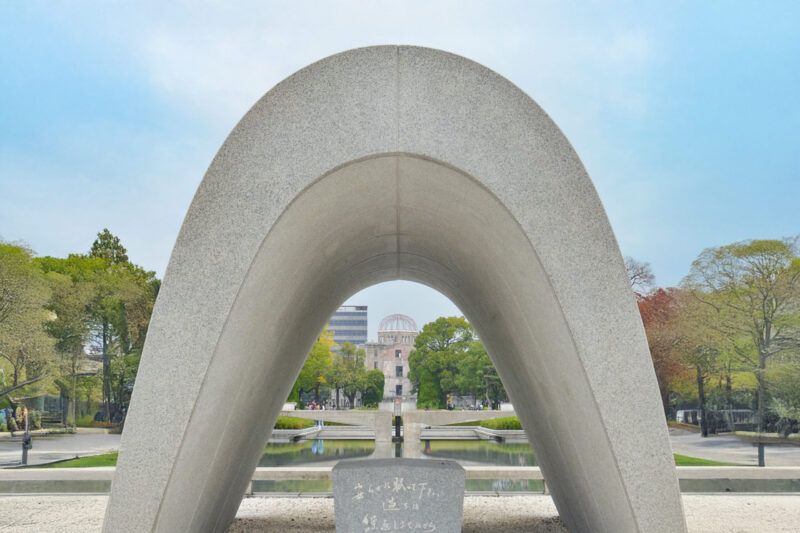 原爆死没者慰霊碑(1952年)。広島平和記念公園(1955年 / 国の名勝)
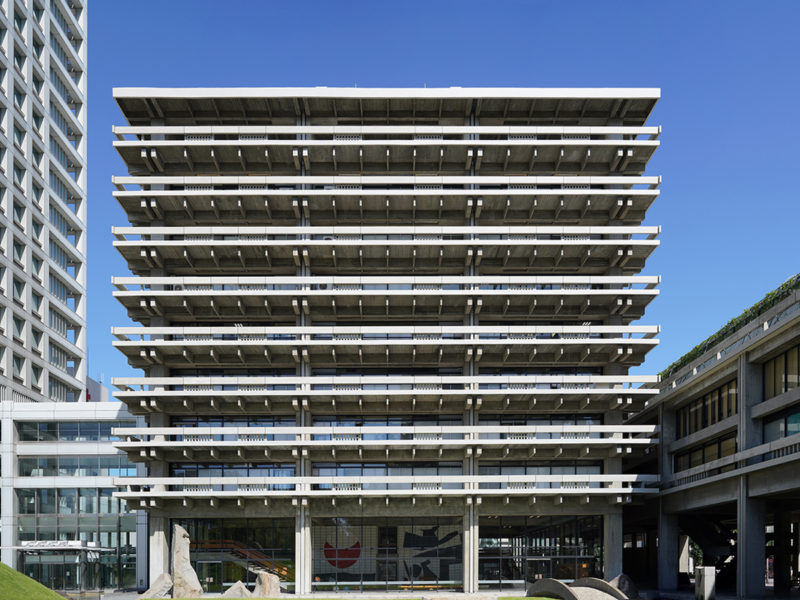 香川県庁舎東館(1958年 / 重要文化財)

今治市公会堂(1958年)

今治市民会館(1965年)

船の体育館(1964年 / 旧香川県立体育館)

戦没学徒記念館(1966年)
1913年、大阪府に生まれる。
1938年、東京帝国大学工学部建築科を卒業。
ル・コルビュジェに傾倒し、その教え子である前川國男の建築事務所に入る。
1941年、東京大学大学院に入学し、卒業後、1946年から1974年まで母校で教鞭をとり、「丹下研究室」を主宰。浅田孝、大谷幸夫、沖種郎、神谷宏治、槇文彦、磯崎新、黒川紀章、谷口吉生ら多くの優れた人材を育成するとともに、ミラノ工科大学、ハーバード大学、清華大学など世界各国で教育に携わる。
1949年、広島市主催の平和記念公園及び記念館のコンペで1等入選。
1951年、CIAM(近代建築国際会議)に招かれ、広島の計画案を発表、海外の建築界にデビューする。
1950年代は日本的伝統建築と西欧の近代建築のスタイルを融合し、地方自治体の庁舎など公共建築を数多く手掛け、庁舎のプロトタイプと目されている、コンクリート構造でありながら、伝統的建築の美しさを持つ香川県庁舎(1958)を発表する。
1960年代には、成長する都市、東京をコミュニケーションのシステムによって捉える構造改革の必要性を強調した「東京計画1960」を提案する。
1961年に丹下健三+都市・建築設計研究所を開設。そのころから「空間と象徴」という問題に取り組み、構造主義を発展させ、当時最大規模の吊り構造による国立屋内総合競技場(1964)とシェル構造による東京カテドラル聖マリア大聖堂(1964)を設計する。
1970年代に入ると大阪で開催された、日本万国博覧会・会場マスタープランの設計(1970)など、日本の国家的事業に携わると同時に世界各国で建築及び都市計画に携わるようになる。
1986年に行われた新都庁舎の指名競技設計で1等当選し、丸の内にあった旧庁舎に続いて新都庁舎の設計も担当する。また、同年「東京計画1986」を発表。
その後、東京湾の開発が部分的に実現に向けて動き出す中、臨海副都心全体のシンボルとなりうるものとして、台場地区に最先端のメディアセンターというべきフジテレビ本社ビル(1996)が完成する。
海外においても、シンガポール都心に建つ超高層ビル群に活気のある新しいスカイラインを与えているOUBセンター(1986)、UOBプラザ(1995)、フランス・パリ13区のイタリア広場に、都市計画的観点から複合施設のグラン・テクラン(1991)など多数の作品を手掛けている。
フランス建築アカデミー、イギリス王立建築家協会、アメリカ建築家協会の各ゴールドメダル、プール・ル・メリット勲章(西ドイツ)、文化勲章(日本)、プリツカー賞、レジオン・ドヌール勲章(フランス)を受賞し、アカデミーフランセーズ正会員(フランス)にも選出されている。
2005年3月 没。
About Kenzo Tange | TANGE Architectural and Urban Design
Born in Osaka Prefecture in 1913.
Graduated from the Department of Architecture, Faculty of Engineering, Tokyo Imperial University in 1938.
Influenced by Le Corbusier, he joined the architectural firm of Maekawa Kunio, one of Le Corbusier's disciples.
Enrolled in the Graduate School of the University of Tokyo in 1941, and after graduating, taught at his alma mater from 1946 to 1974, heading the ‘Tange Laboratory.’ He nurtured many outstanding talents, including Takashi Asada, Yukio Ohtani, Shiro Okishima, Hiroji Kamiya, Fumihiko Maki, Arata Isozaki, Kisho Kurokawa, and Yoshio Taniguchi, while also engaging in education at universities around the world, including the Milan Polytechnic, Harvard University, and Tsinghua University.
In 1949, he won first prize in a competition held by the city of Hiroshima for the design of the Peace Memorial Park and Memorial Hall.
In 1951, he was invited to CIAM (International Congress of Modern Architecture) and presented his plan for Hiroshima, making his debut in the international architectural community.
In the 1950s, he fused Japanese traditional architecture with Western modern architectural styles, designing numerous public buildings such as local government offices. He unveiled the Kagawa Prefectural Government Building (1958), which is considered a prototype for government offices, featuring a concrete structure while retaining the beauty of traditional architecture.
In the 1960s, he proposed the ‘Tokyo Plan 1960,’ emphasising the need for structural reform to address the growing city of Tokyo through a communication system.
In 1961, he established Kenzo Tange + Urban and Architectural Design Institute. From that time on, he tackled the issue of ‘space and symbolism,’ developing structuralism and designing the National Indoor Sports Arena (1964), the largest suspended structure at the time, and Tokyo Cathedral St. Mary's Cathedral (1964), a shell structure.
In the 1970s, he became involved in national projects in Japan, such as the design of the master plan for the Japan World Exposition in Osaka (1970), while also working on architecture and urban planning projects around the world.
In 1986, he won first prize in the design competition for the new metropolitan government building and was commissioned to design the new building, following his work on the old building in Marunouchi. In the same year, he announced ‘Tokyo Plan 1986.’
As the development of Tokyo Bay began to move forward in part, the Fuji Television Headquarters Building (1996), a state-of-the-art media centre, was completed in the Odaiba district as a symbol of the entire coastal sub-city centre.
Overseas, he has also designed numerous works, including the OUB Centre (1986) and UOB Plaza (1995), which give the skyscraper cluster in the centre of Singapore a vibrant new skyline, and the Grand Téran (1991), a mixed-use facility in Italy Square in the 13th arrondissement of Paris, France, designed from an urban planning perspective.
He has received the Gold Medal from the French Academy of Architecture, the Royal Institute of British Architects, and the American Institute of Architects, the Pour le Mérite Order (West Germany), the Order of Culture (Japan), the Pritzker Prize, and the Legion of Honour (France). He was also elected a full member of the French Academy.
He passed away in March 2005.